
Integrating Indian Knowledge Systems in Modern Education A.Y: 2025-2026
IKS
Ex utamur fierent tacimates duis choro an
Lorem ipsum dolor sit amet, ius minim gubergren ad. At mei sumo sonet audiam, ad mutat elitr platonem vix. Ne nisl idque fierent vix.
An NEP-2020 Perspective Indian Knowledge Systems (IKS) represent the rich intellectual traditions of India that have developed over thousands of years in areas such as philosophy, science, mathematics, medicine, agriculture, governance, art, architecture, and spirituality. These systems reflect India’s holistic approach to knowledge, where learning is closely connected with ethics, sustainability, and the well-being of society. In recent years, there has been a renewed emphasis on integrating IKS into the modern education framework, especially through the implementation of the National Education Policy 2020 (NEP-2020).
Concept of Indian Knowledge Systems (IKS)
Indian Knowledge Systems encompass the traditional wisdom preserved in ancient texts, practices, and cultural traditions. These include disciplines such as Ayurveda, Yoga, Astronomy, Mathematics, Metallurgy, Architecture (Vastu Shastra), Environmental practices, and Indian philosophy. The knowledge embedded in these systems reflects deep scientific understanding and practical applications developed through observation, experimentation, and experience.
IKS also promotes a holistic worldview, integrating intellectual, emotional, physical, and spiritual development. It emphasizes values such as harmony with nature, ethical living, community welfare, and sustainable development.
IKS in the Context of NEP-2020
The National Education Policy 2020 recognizes the importance of India’s cultural and intellectual heritage and encourages the integration of traditional knowledge with contemporary education. NEP-2020 aims to ensure that students not only acquire modern scientific knowledge but also develop an understanding of India’s rich heritage and traditional wisdom.
The policy recommends incorporating IKS into curricula across various disciplines, encouraging research in traditional knowledge systems, and promoting interdisciplinary learning. It also emphasizes the study of classical languages such as Sanskrit and regional languages to access original texts and knowledge sources.
Objectives:
- To connect students with industry professionals and real-world practices through seminars, visits, and expert talks
- To Decode & translate reliable ideas (math, astronomy, ecology, logic, medicine case notes, governance, arts) into teachable modules/case studies.
- Indian-situated learning: give students local examples & methods (e.g., Indian algorithm history, traditional water/soil practice, grammar logic) to strengthen critical thinking.
- To bridge the gap between theory and application through workshops and hands-on training.
- To develop leadership, initiative, and organizational skills by involving students in planning and leading activities.
- To Ethics & access: credit communities/gurus, separate sacred vs clinical, avoid essential zing.
Committee Members
| Name | Designation |
| Dr. Reshma Vaja | Chairperson |
| Dr. Meena Mashru | Convener – BMS & Bsc-IT |
| Prof. Sanjay C Raval | Convener – B.com |
List of Activities of 2025-2026
| Sr. No | Date | Activity |
| 1 | 24th December 2025 | Tulsi Pujan Diwas ( Tulsi worship / Herbal-Value Day) |
| 2 | 9th January 2026 | Spiritual Awareness session & Distribution of Bhagwad Geeta |
| 3 | 14th February 2026 | Matru Pitru Pujan Divas: celebrating parental Love and Gratirude |
| 4 | 16th February 2026 | Peace & Communal Harmony and Spreading Gandhian Thoughts in Youth |
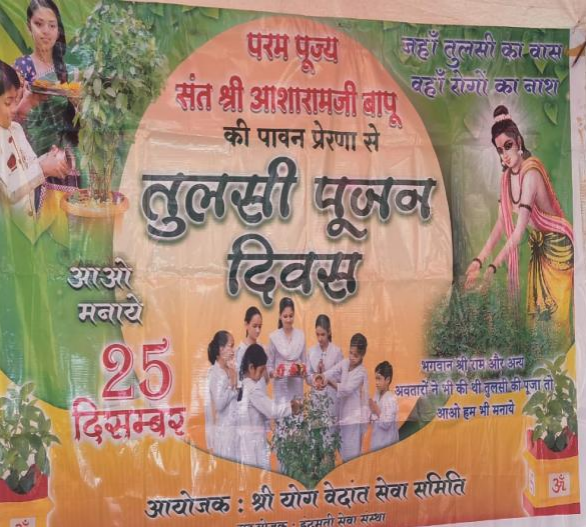
Event: Tulsi Pujan Diwas (Tulsi worship / Herbal-Value Day)
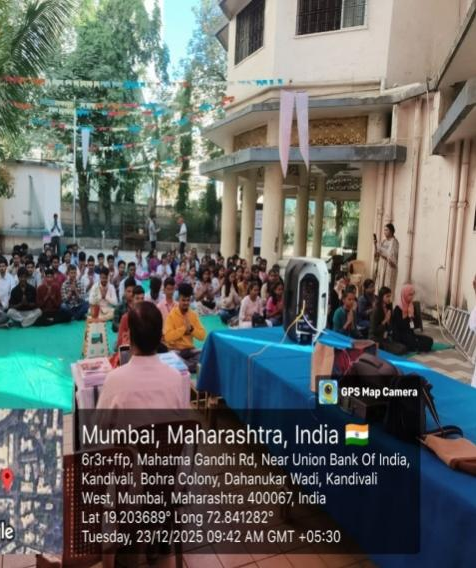
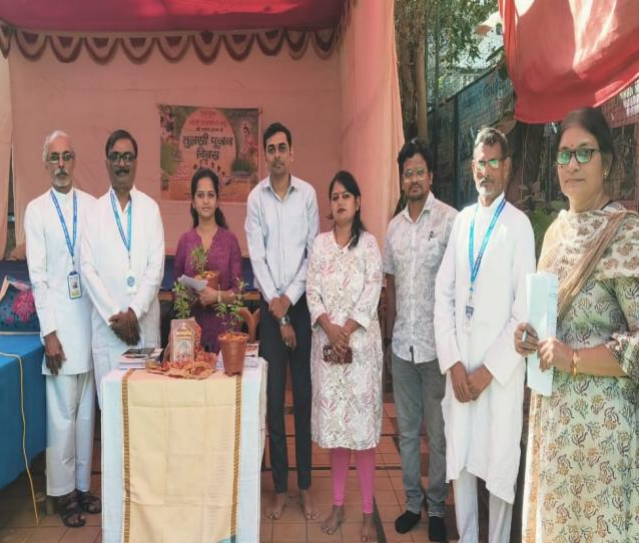
Date: 24th December 2025
Objective: Highlight *ethno-biodiversity & health* associations of Osmium spp. (air quality, mosquitoes, routine); link *plant care → daily discipline; encourage **home herbal patches* (not blind ritual).Outcomes: Talk + demo done; *50–100 saplings* pledged/planted; students submit *1-week care log; one-page handout on **science vs faith* boundaries; campus patch mapped.
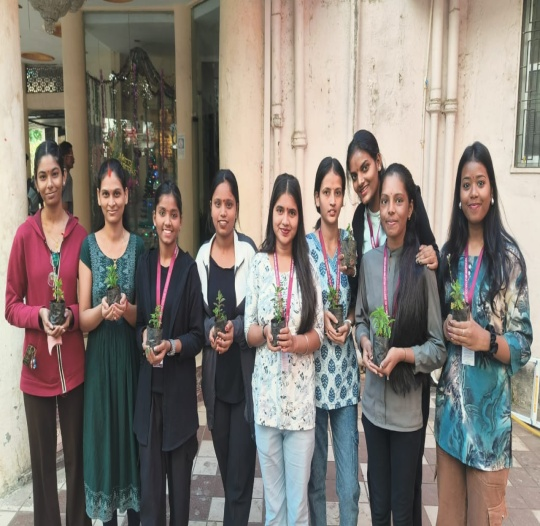
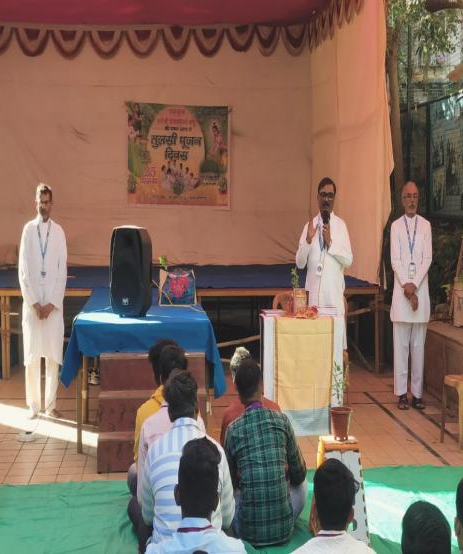
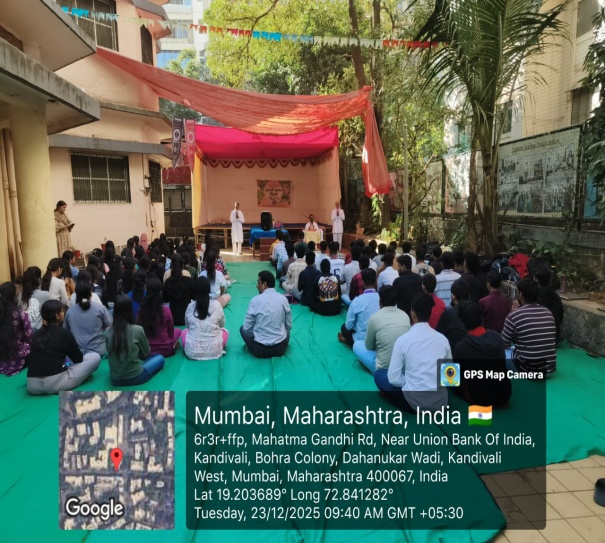
Tulsi Pujan Diwas was celebrated on 24th December 2025 in the institution with great enthusiasm and devotion. The program was organized to highlight the spiritual, medicinal, and environmental significance of the Tulsi plant (Holy Basil) in Indian culture. Tulsi is considered sacred and is widely known for its powerful herbal and medicinal properties that contribute to health and well-being. The main objective of the activity was to create awareness among students about the importance of medicinal plants, encourage respect for nature, and promote the preservation and use of traditional herbal remedies.
Event: Spiritual Awareness session & Distribution of Shreemad Bhagwad Geeta
Date: 9th January 2026
Objective: Share the text as *philosophical literature: clarify **svadharma, sthitaprajña, karma vs phala, goal-as-orientation (not escapism); give **reasoned summary* + *what’s open to interpretation*.
Outcomes: Copies placed (library/hall — with summary sheet); *30-min talk + Q&A* (no preaching); students submit *1 paragraph: “One idea I’ll test this month”; **disclaimer* logged that college doesn’t endorse sectarian rites.
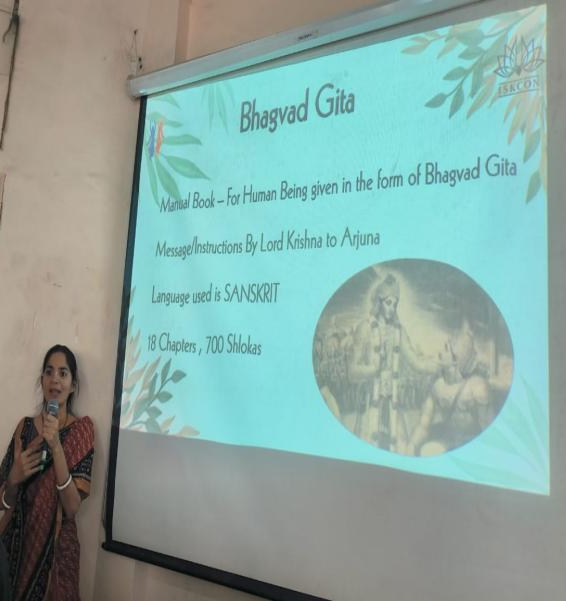
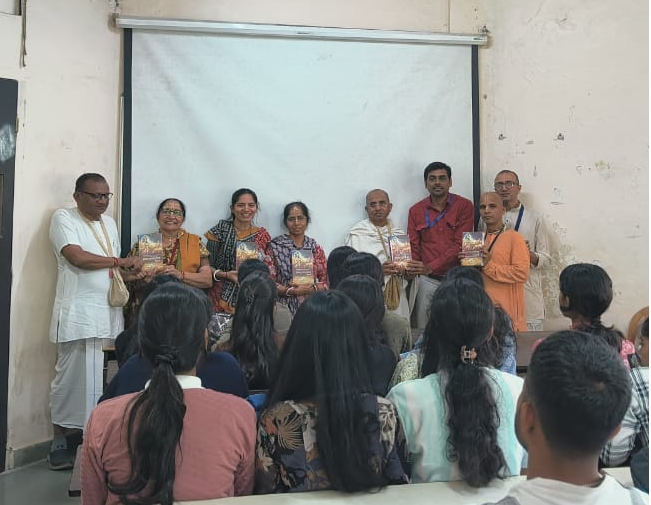
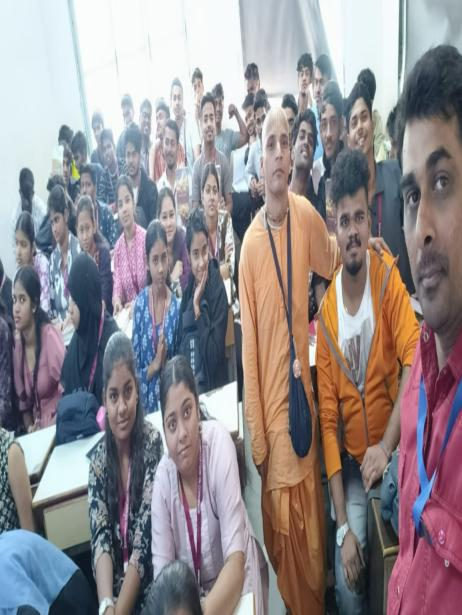
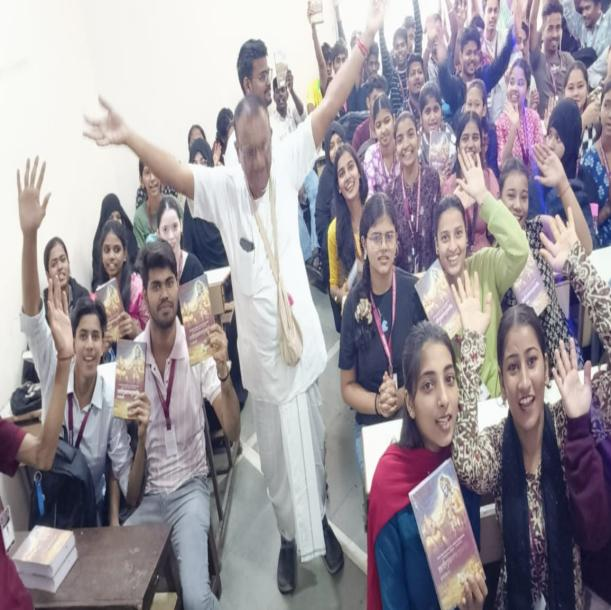
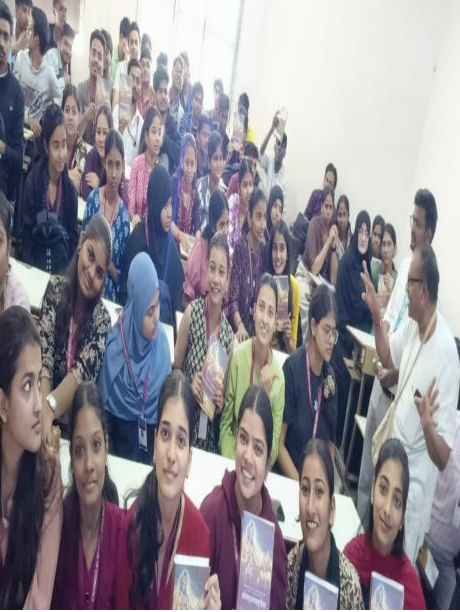
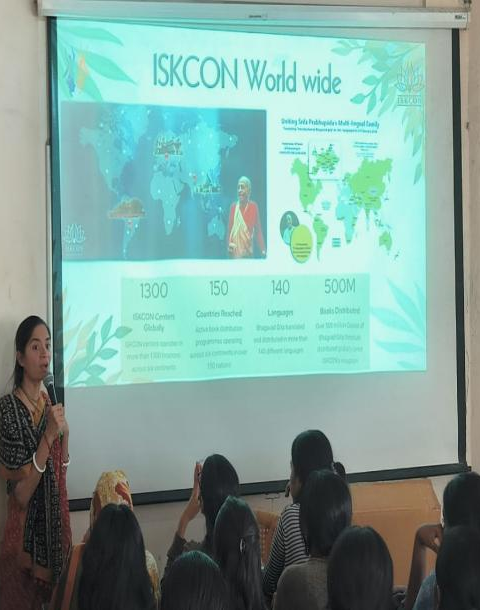
Spiritual Awareness Session by Hari Krishna Temple ISKCON (Devi & Das Group)
With utmost humility and devotion, the Devi & Das group from Hari Krishna Temple, ISKCON conducted a spiritual awareness session for students, focusing on the timeless wisdom of the Shrimad Bhagavad Geeta and its relevance in modern life. The speakers lovingly explained that the Bhagavad Geeta is not merely a religious scripture but a practical guide for spiritual and moral living. Its teachings help individuals understand the true nature of the Atma (soul), the importance of selfless karma, and the value of performing one’s duties with sincerity, faith, and devotion.
Students were gently encouraged to make a habit of daily reading of the Bhagavad Geeta, even a few verses each day, to develop clarity of mind, positive thinking, discipline, and inner peace. The session emphasized that by improving one’s karmas, controlling the mind, and following righteous actions, one can progress spiritually and live a balanced life. The speakers also shared inspiring examples of great personalities and leaders who believed in and followed the teachings of the Bhagavad Geeta, demonstrating how its principles have guided people across generations toward wisdom, courage, and righteousness.
As a gesture of love and service, the Bhagavad Geeta was distributed to students in three languages — Hindi, Marathi, and English — so that everyone could read and understand the message in a language close to their heart.
The session concluded with a humble appeal to students to regularly read spiritual books, stay connected with the Supreme Lord, and adopt spiritual values in daily life to live a peaceful, meaningful, and joyful life.
Event: Matru Pitru Pujan Divas: celebrating parental Love and Gratitude Date: 14th February 2026
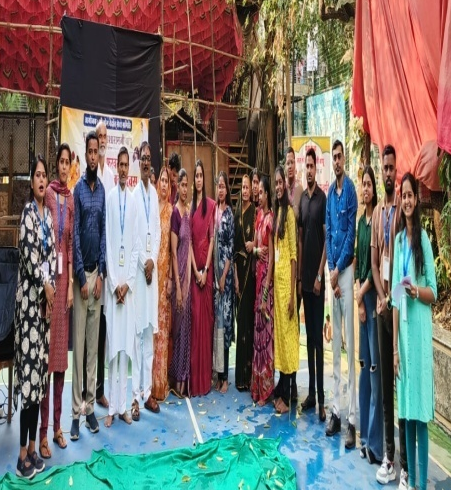
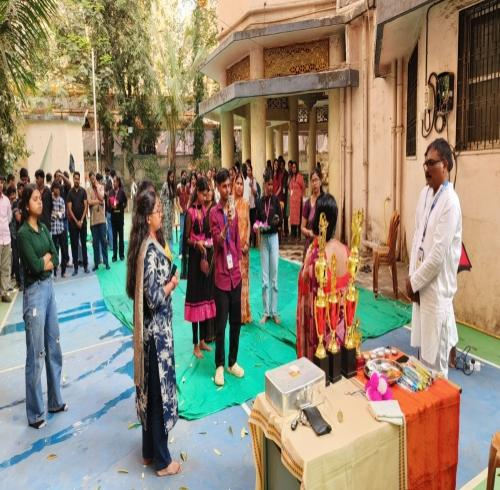
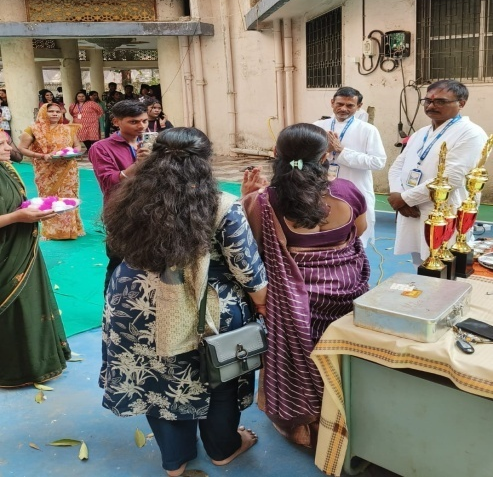
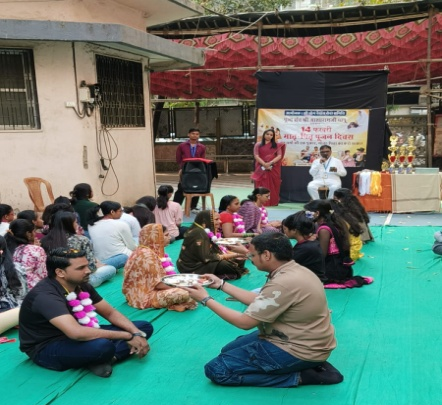
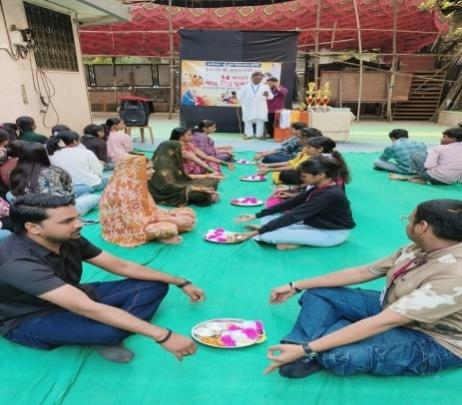
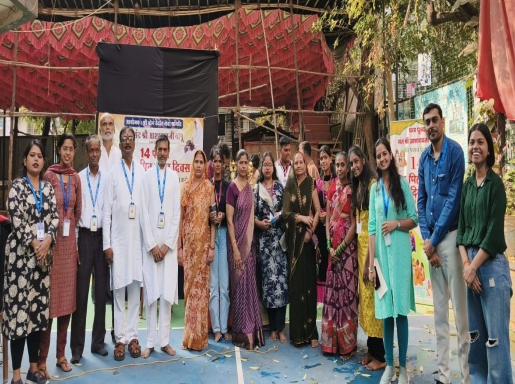
Shree Yog Vedant Seva Samiti, in collaboration with IKS of Niranjana Majithia College of Commerce, proudly organized Matru Pitru Pujan Divas, also known as Parents Worship Day, on February 14th. The event was part of the Ek Vishwa Vyati Abhiyan, aiming to promote the importance of parental love and gratitude. The program saw enthusiastic participation from students and their parents, who gathered to celebrate the invaluable bond between parents and children. The event was led by Team Shree Manshukhbhai Rathodji and Shree Ajitbhai Gorpade from Yog Vedanta Seva Samiti, along with Bal Shankar Kendra members.
The event highlighted the significance of parents in children’s lives, their role, support, and the values they instill. Students were reminded of the immense contributions parents make towards their betterment and the importance of acknowledging and appreciating these efforts. The program featured inspiring speeches and interactions, where parents and students shared their thoughts and experiences. The event concluded with a heartfelt celebration of parental love and gratitude, leaving a lasting impact on all attendees.
We thank all participants, parents, and organizers for making this event a success. Let’s continue to cherish and honor the bond between parents and children.
Objective: Operationalize *gratitude & inter-generational responsibility* (time, care, consent, elder support) as *public values; reduce per formative ritual; promote **family communication & elder-digital/legal aid*.
Outcomes: Letters/cards written by students; *parent meetings* held (or invited); *2–3 pledges* per participant (e.g., weekly call, help with medicines/ATM); feedback note; photos & consent on file
Matru Pitru Pujan Divas: celebrating parental Love and Gratitude
Event: Peace & Communal Harmony and Spreading Gandhian Thoughts in Youth
Date: 16th February 2026
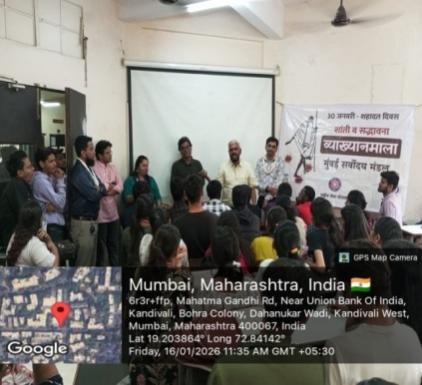
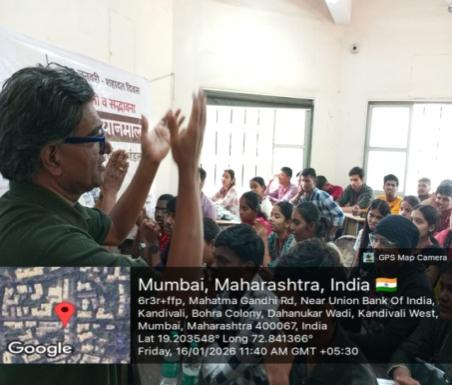
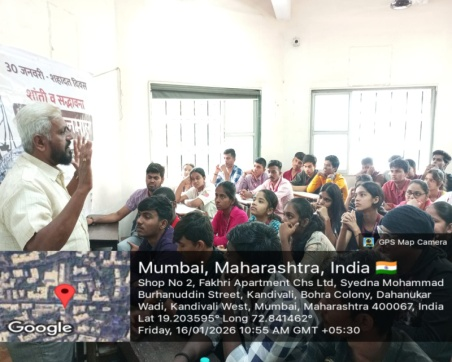
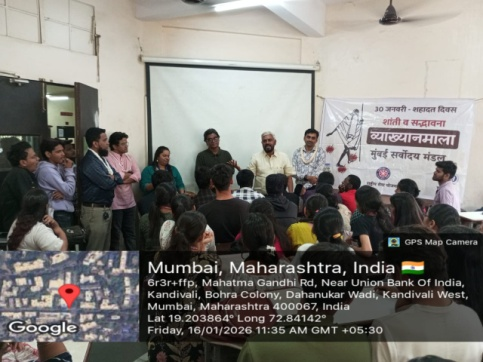
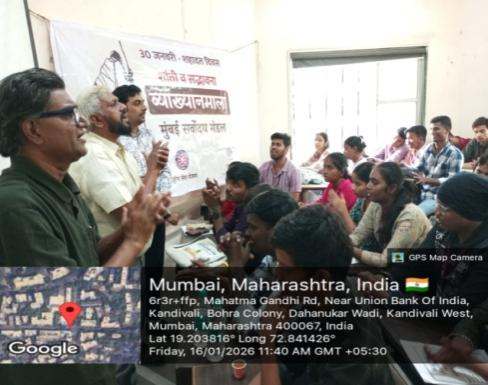
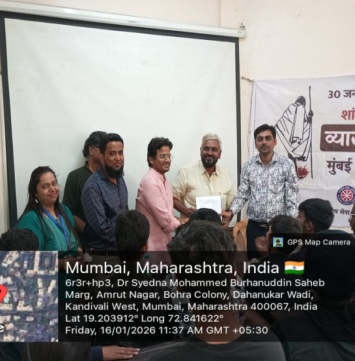
NSS Unit B35 and Elite Association are pleased to host a Guest Lecture on Peace & Communal Harmony and Spreading Gandhian Thoughts in Youth.
Speaker: Mr. Bajrang Sonavne, Mumbai Sarvoday Mandal, a renowned expert on Gandhian philosophy and social harmony, will share insights on the relevance of Mahatma Gandhi’s principles in today’s world and how youth can contribute to building a peaceful and inclusive society.
Date: 16th January 2026 (Friday)
Time: 10:20 AM to 11:20 AM
Venue: Block No. 29, 2nd Floor, College Campus
The lecture aims to inspire young minds to embrace non-violence, tolerance, and community service, fostering a spirit of unity and national integration.
Objective: Use *Gandhi/ahimsa/trusteeship/sarva-dharma-samabhāva* to run *active harmony: speech rules, rumor check, service with “other” communities; build a **doable code* (listen → clarify → aid).
Outcomes: Pledge/wall* signed; *mixed-group activity* held (clean-up/langar/reading in another locality or with another faith group); *incident-response sheet* drafted; 10 student mediators named.
Conclusion
Integrating Indian Knowledge Systems in modern education, as envisioned in NEP-2020, represents an important step toward creating a balanced and culturally rooted education system. By combining traditional wisdom with modern scientific knowledge, educational institutions can develop students who are not only technically competent but also culturally aware, ethically responsible, and capable of contributing to sustainable development and global knowledge advancement.
Outcome:
The integration of IKS in education helps create a balanced education system that combines traditional wisdom with modern scientific knowledge, enabling students to become culturally rooted, globally competent, and socially responsible individuals.